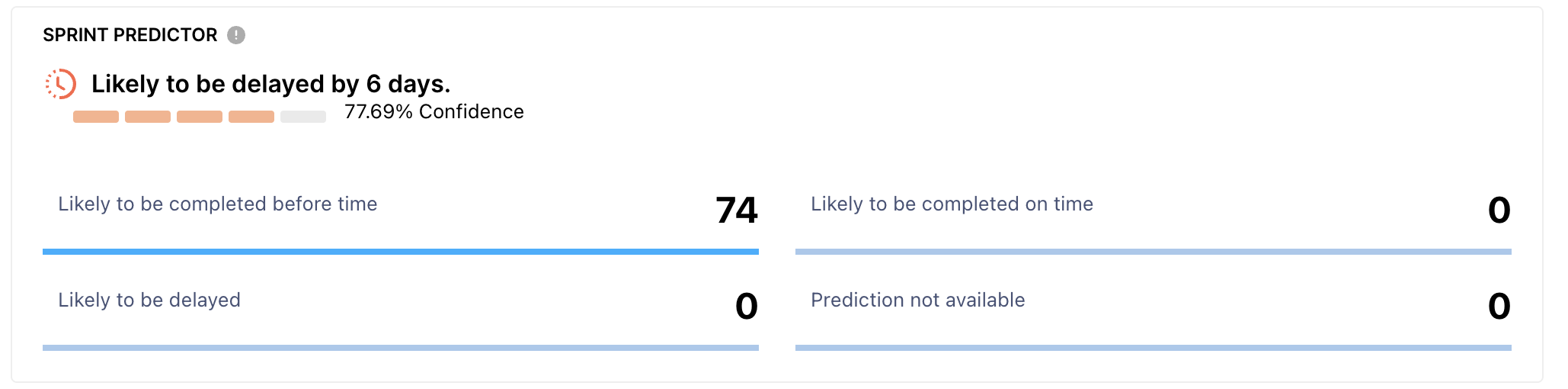
Know when work will be done — before it becomes a problem. Kine AI Predictions uses historical delivery data to estimate how long tasks are likely to take so teams can plan better, commit confidently, and avoid surprises.
Kine analyzes how work has been completed in the past to predict how long similar tasks will take in the future. By learning from real delivery patterns, the system generates realistic completion estimates for current work.
Predictions appear automatically in planning workflows — helping teams adjust scope, manage capacity, and set better expectations.
Kine analyzes completed tasks to understand delivery patterns.
Based on historical patterns, the system produces realistic duration estimates.
As new work is completed, predictions become more accurate.
Teams see predicted durations for backlog items and adjust scope before committing to the sprint.
Program leaders compare predicted workload against PI length and adjust scope early.
Leaders answer "When will this ship?" using predicted delivery ranges instead of guesses.
Delivery managers understand whether teams are overloaded before committing to new initiatives.
Estimates are based on real delivery data instead of intuition.
Potential delays are identified earlier before deadlines are missed.
Leaders see predicted workload and completion timelines across teams.
Customer and stakeholder timelines are grounded in data.
Plan timelines and commitments using predicted delivery ranges.
Balance sprint scope and identify tasks likely to slip.
Communicate realistic feature delivery timelines to stakeholders.
Track delivery efficiency and understand organizational performance trends.
Ask questions like "Are we on track?" or "What's our velocity?"
Visualize cycle time, delivery health, and progress across teams.
Understand individual contributions and delivery impact.
With AI Predictions, delivery planning becomes clearer, more predictable, and grounded in real data.
Request a Demo